
BoardHub, Boarding House Management System
A complete PHP boarding house and dormitory management system with a tenant portal, automated billing, utility tracking, QR payments, contracts, reports, and multi-role access.
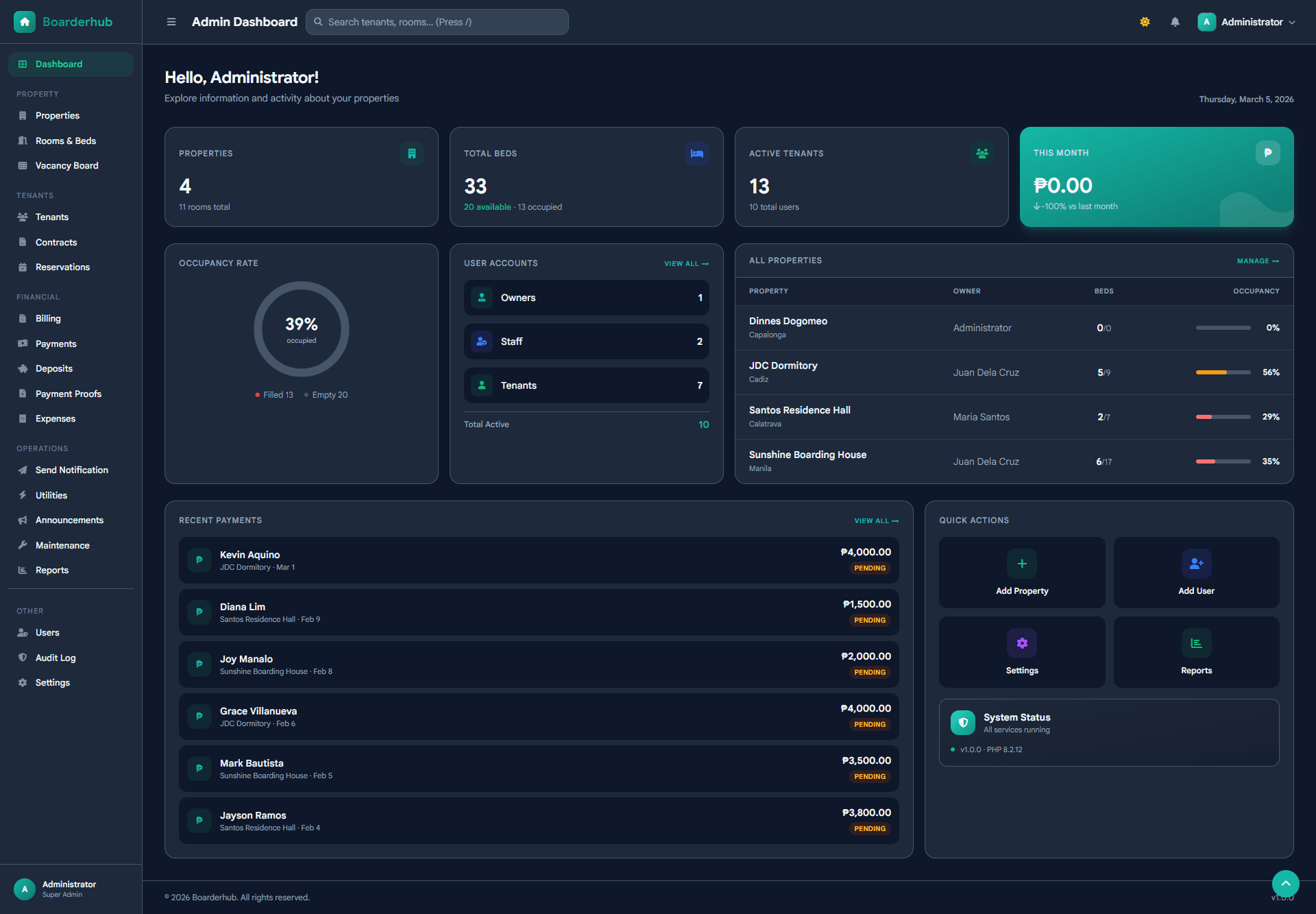
BoardHub is a self-hosted, multi-tenant boarding house management system built in PHP and MySQL.
It runs a property from the vacancy listing through reservation, contract, monthly billing and payment verification, with a separate portal for the tenants themselves. It is also sold as a ready-to-deploy source code product.
What was in the way
Boarding house and dormitory operators run on a notebook and a group chat. Who is in which bed, who has paid, whose contract ends this month, which meter reading the electricity share was based on. It works until there is more than one property, and then it stops working quietly rather than loudly.
The existing software options are property management systems designed for hotels or for western style apartment rentals. Neither models a bed as a billable unit, and neither handles the payment methods people actually use, which in this market means GCash, Maya and a photograph of a bank transfer receipt.
Seven parts, each with a reason
Rooms, beds and multiple properties
A property contains rooms, a room contains beds, and a bed is what a tenant occupies. Modelling it at bed level is the decision that makes the rest of the system work, because it is what lets occupancy, billing and vacancy all be correct in a shared room. One dashboard covers every property the operator owns.
Automated monthly billing with itemised charges
Bills generate monthly with itemised lines: rent, utilities, deposits and any extra charges. Utility readings are recorded per period, so the shared electricity charge is derived from a meter reading rather than guessed. Deposits are tracked separately from rent, which matters when a tenant moves out and the balance has to be settled.
A tenant portal
Tenants get their own login to view bills, submit payment proof, raise maintenance requests and read announcements. That removes the single largest source of interruptions for the operator, which is being asked the same three questions by message.
Reservations from a public listing
A public vacancy page lists available rooms and takes reservation requests, so the property has a front door that is not a chat thread.
Contracts, maintenance and reporting
Digital lease agreements with PDF export. Maintenance requests with status tracking. Reports covering income, occupancy, overdue balances and tenants. Announcements push to tenants through in-app, email and SMS.
Payment proof, verified rather than assumed
Tenants submit payment through GCash, Maya or bank transfer and upload proof. That proof lands in an admin queue for verification rather than marking the bill paid automatically. It matches how the money actually moves, and it means the ledger reflects confirmed payments rather than claims.
Built to be sold, not just deployed
Because BoardHub is also a product, it carries the things a buyer needs and an internal tool would not: a demo mode with a guided tour and data protection so a prospect can explore without breaking anything, an optional subscription layer with plan based limits for anyone running it as a service for other operators, role and permission management, and an audit log across every action.
The engineering underneath
A hand-rolled MVC structure rather than a framework: controllers, models, views, a small core and a helper layer. Twenty-five controllers and twenty-four models, each mapping to a real concept in the domain rather than to a database table.
That choice is deliberate for a product that other people will deploy. The target buyer is running shared PHP hosting, not a container platform, and the install needs to be an upload and a database import rather than a Composer run and a queue worker. No framework means no version treadmill for the buyer and a much shorter list of things that can go wrong on hosting I do not control.
Scheduled work runs through cron: bill generation, overdue checks and notification dispatch.
PHP with MySQL, hand-rolled MVC, and a small REST API surface for the portal's interactive parts. Server-side rendering throughout, with JavaScript only where it earns the complexity.
Multi-tenancy is scoped at the property level, so one installation can serve an operator with several buildings, and the optional subscription layer can serve a platform operator with several customers.
See it live
BoardHub, Boarding House Management SystemThe live site · boardhub.deeve.infoSource code for saleIn the shop · View the listingHire me for this
PHP & Laravel Source CodeFrom $14/hrFull-Stack Web DevelopmentFrom $14/hrHosting & Server ManagementFrom $14/hrProjects like this
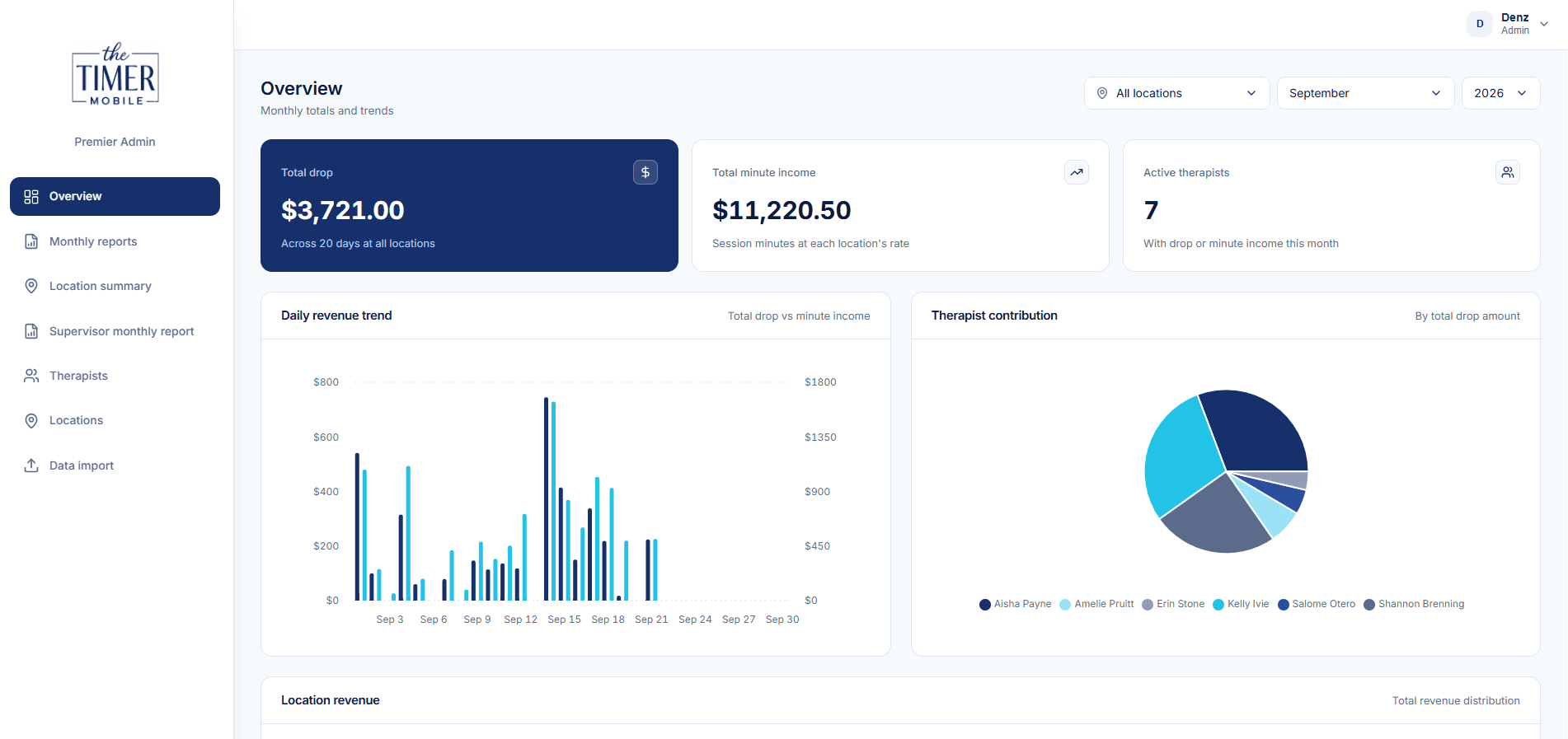
Premier Metrics, Admin Dashboard
The office dashboard behind a mobile timer app. React and TypeScript on Vite with Supabase and Vercel: monthly...
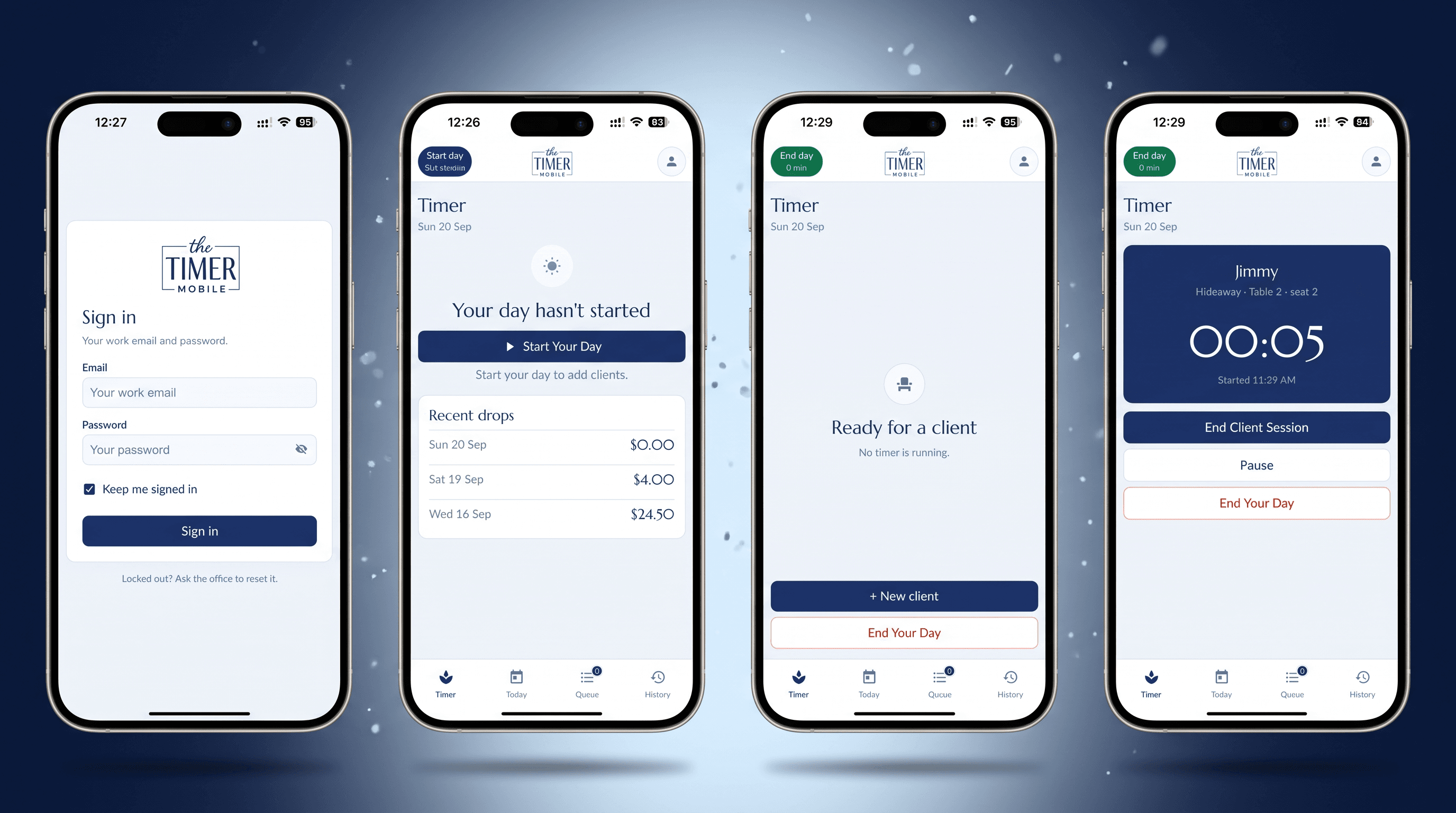
Premier Timer, iOS and Android App
Taking over from a departing programmer: an unfinished React Native app rebuilt and shipped to the App Store...
Deeve Technologies Portfolio, Next.js Rebuild
This site: my portfolio rebuilt from a custom WordPress theme onto Next.js 16, React 19 and Supabase, with...
I build software, and I measure whether it works.
The same questions I research are the ones I ask on client builds: is it reliable, is it fast, is it easy to use, and is it secure. Those four drove satisfaction in my ICT portal study, and they shape how I scope and test every project.