
Smart AI Lead Manager
AI-assisted lead management with automatic scoring, drafted reply suggestions and pipeline tracking, built on an OpenAI integration.
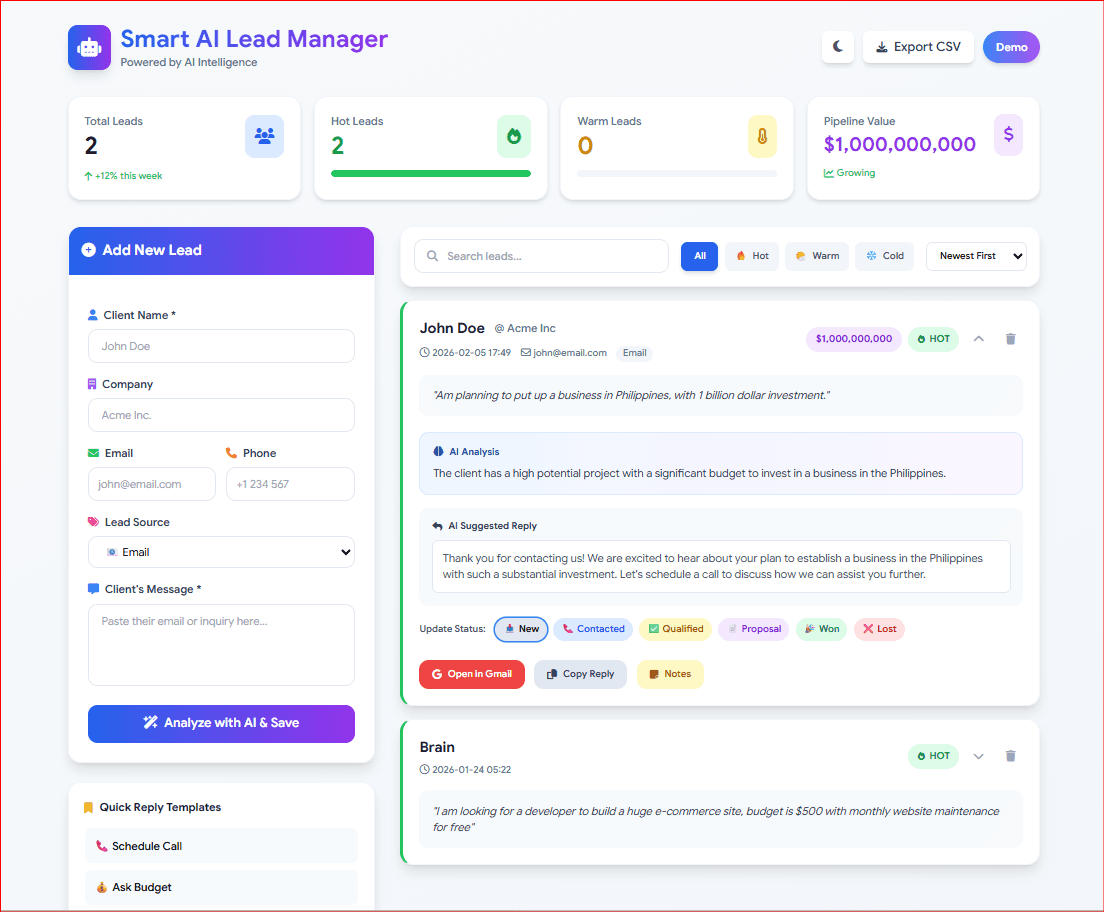
Smart AI Lead Manager scores incoming leads, drafts replies and tracks them through a pipeline.
Using an OpenAI integration over a plain PHP application.
What was in the way
A business generating more leads than it can call needs to know which ones to call first.
Without triage, the newest lead gets the attention rather than the best one, because the newest is the one at the top of the inbox. That is the wrong order almost every time. A three day old enquiry with a real budget and a defined timeline is worth more than a fresh one asking whether you do websites.
The second cost is drafting. Following up is slow not because typing is slow but because starting is slow. The blank reply box is where the delay happens, and in local services the delay decides the job.
Four parts, each with a reason
Automatic lead scoring
Incoming leads ranked so sales effort goes where it is most likely to pay.
Scoring runs on what the lead actually said rather than on form metadata. Two enquiries submitted through the same form, one describing a specific job with a timeline and one asking a general question, are not equivalent, and only the content distinguishes them.
Smart reply suggestions
Drafted responses the user edits and sends.
Drafted, not sent. The model produces a starting point and a person makes it right. Auto-sending model output to a prospective customer is how a business ends up apologising for something it did not write.
Where the model earns its place, and where it does not
This is the part worth reading if you are considering AI in a workflow.
Scoring and drafting are genuinely messy, judgement-shaped tasks. Deciding whether a paragraph of free text describes a serious enquiry is not expressible as rules, and writing an opening line that fits the enquiry is exactly what a language model is good at.
The pipeline mechanics underneath are plain deterministic code. Stage transitions, assignment, timestamps, reminders. Rules are cheaper, faster and more reliable than a model for anything with a definite answer, and they can be reasoned about when something goes wrong.
Most AI features fail by putting the model in the wrong half of that split. A model deciding what stage a lead is in, when the rule is unambiguous, is slower, more expensive and occasionally wrong for no benefit.
The other half of the rule: the model never takes an irreversible action. It ranks and it drafts. It does not send, delete or commit anything a person would have to undo.
Pipeline tracking
Stage-based progress so nothing sits unattended. A lead that has not moved in a week surfaces rather than quietly ageing.
The engineering underneath
PHP with an OpenAI API integration, deployed on its own subdomain.
Model calls run out of band rather than inside the request that receives the lead. A lead submission must never fail because an API was slow, so capture completes first and scoring follows.
Which means scoring failure is non-fatal. If the API is down the lead still arrives, unscored, and can be scored later. A system where the AI layer can lose a lead is worse than no AI layer.
Prompts live in one place rather than being scattered through the code, so tuning the scoring criteria is an edit to a prompt rather than a hunt through the codebase.
PHP with the OpenAI API. Deployed on its own subdomain.
Hire me for this
AI & Workflow AutomationFrom $14/hrAPI & IntegrationsFrom $14/hrGoHighLevel SpecialistFrom $10/hrProjects like this
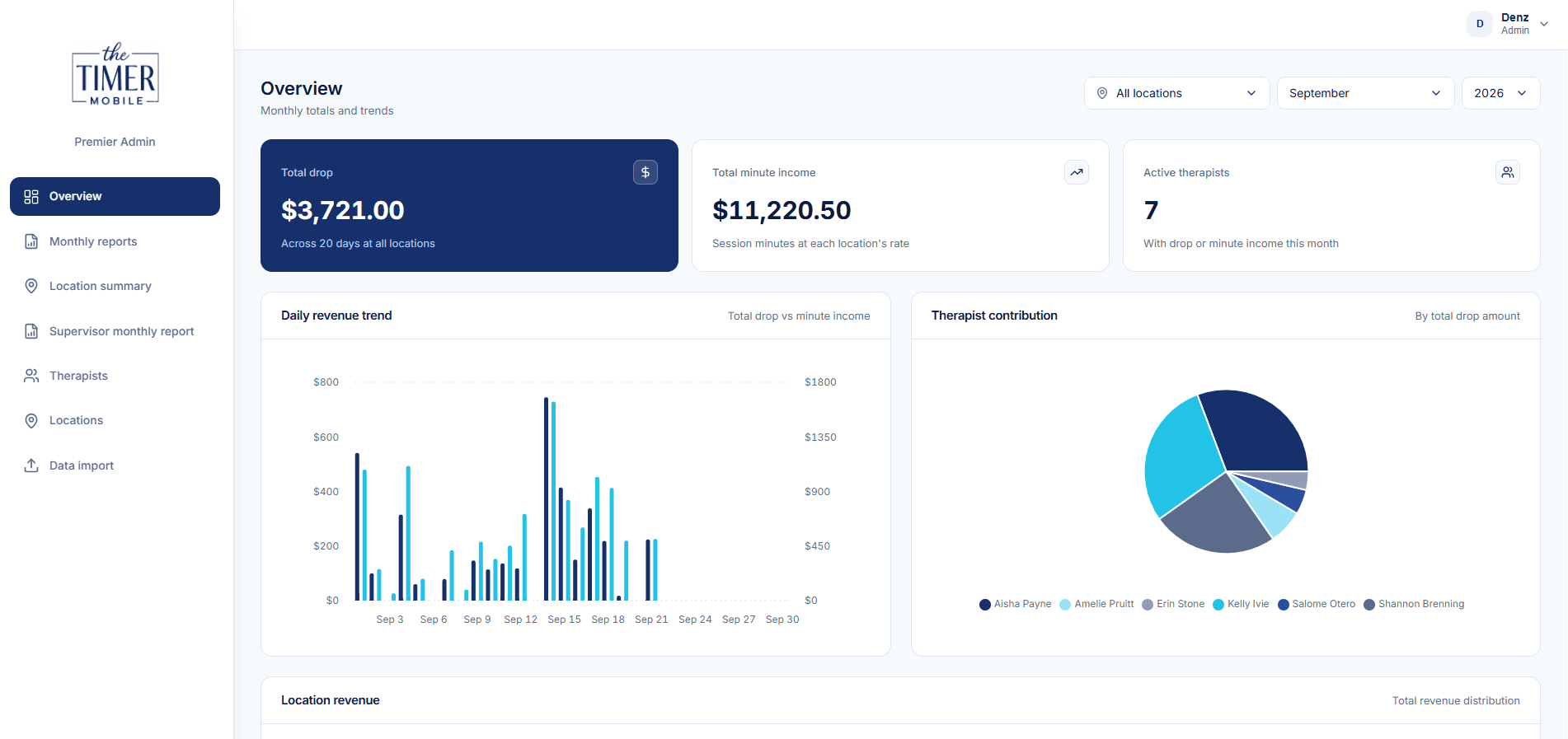
Premier Metrics, Admin Dashboard
The office dashboard behind a mobile timer app. React and TypeScript on Vite with Supabase and Vercel: monthly...
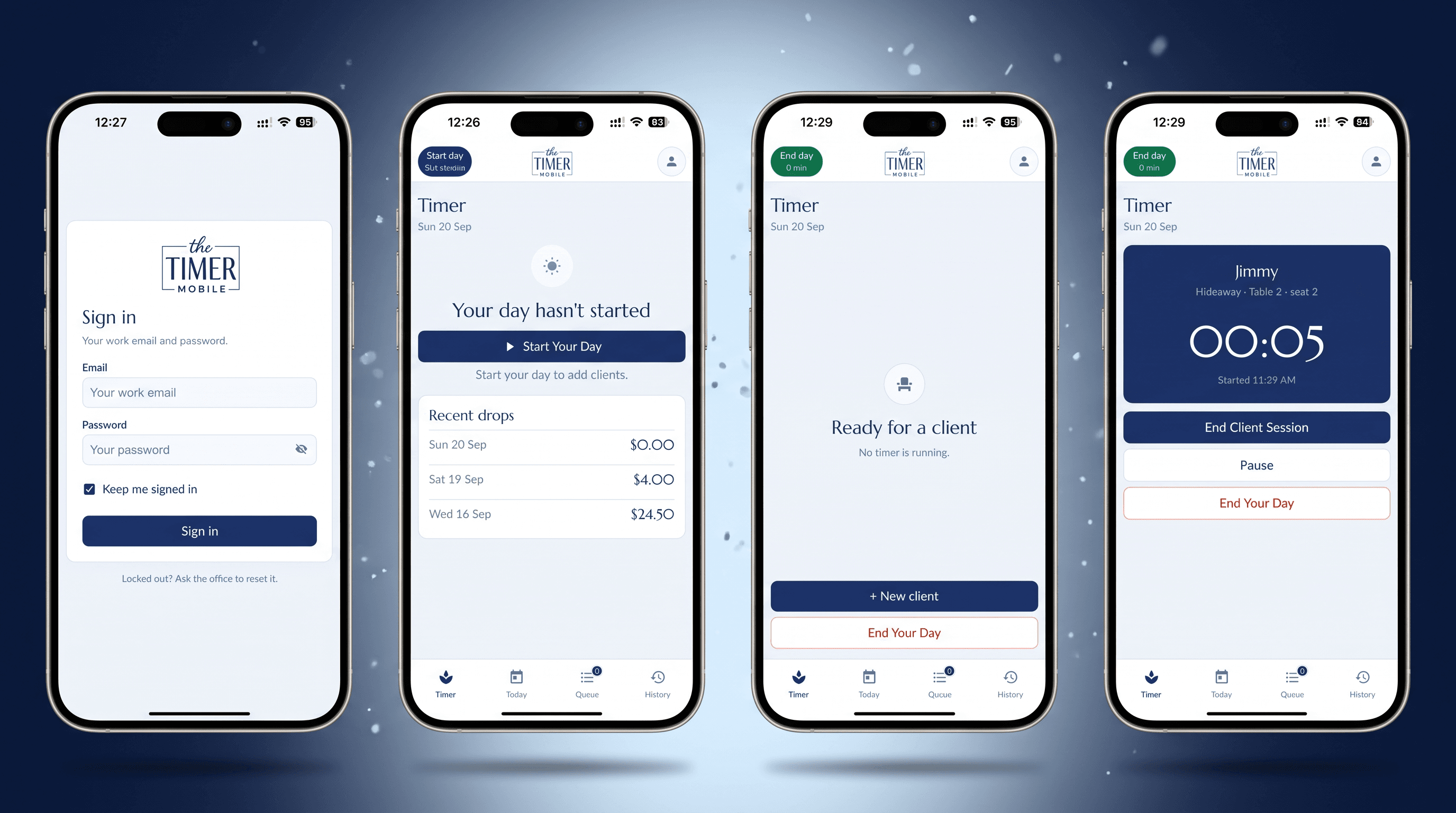
Premier Timer, iOS and Android App
Taking over from a departing programmer: an unfinished React Native app rebuilt and shipped to the App Store...
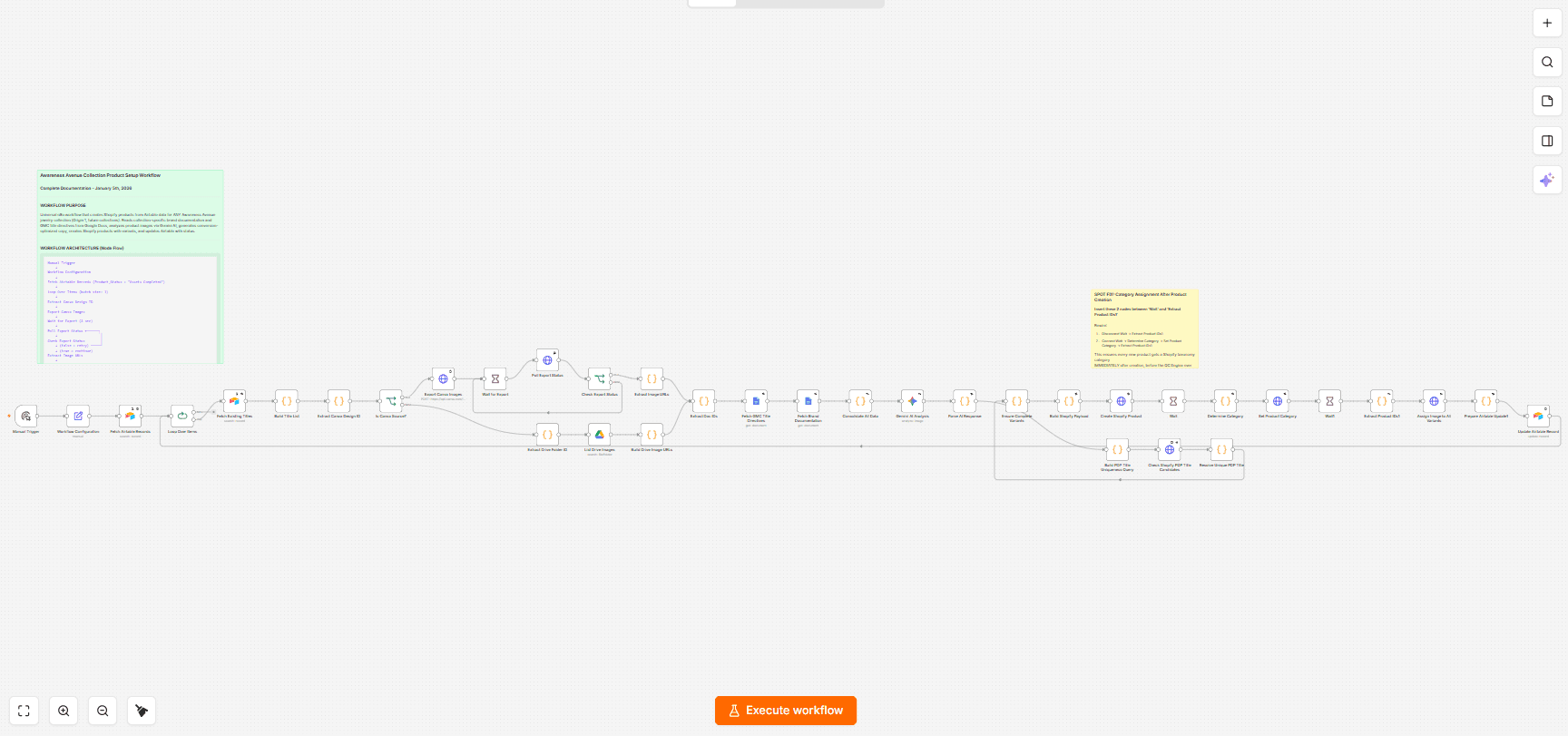
Awareness Avenue, n8n Pipeline
Two n8n workflows, 67 nodes, taking a jewellery collection from an Airtable row to a categorised Shopify...
I build software, and I measure whether it works.
The same questions I research are the ones I ask on client builds: is it reliable, is it fast, is it easy to use, and is it secure. Those four drove satisfaction in my ICT portal study, and they shape how I scope and test every project.