
Awareness Avenue, n8n Pipeline
Two n8n workflows, 67 nodes, taking a jewellery collection from an Airtable row to a categorised Shopify product: four parallel Perplexity research passes, Gemini brand and GMC title docs, Canva and Drive images, and collision-free PDP...
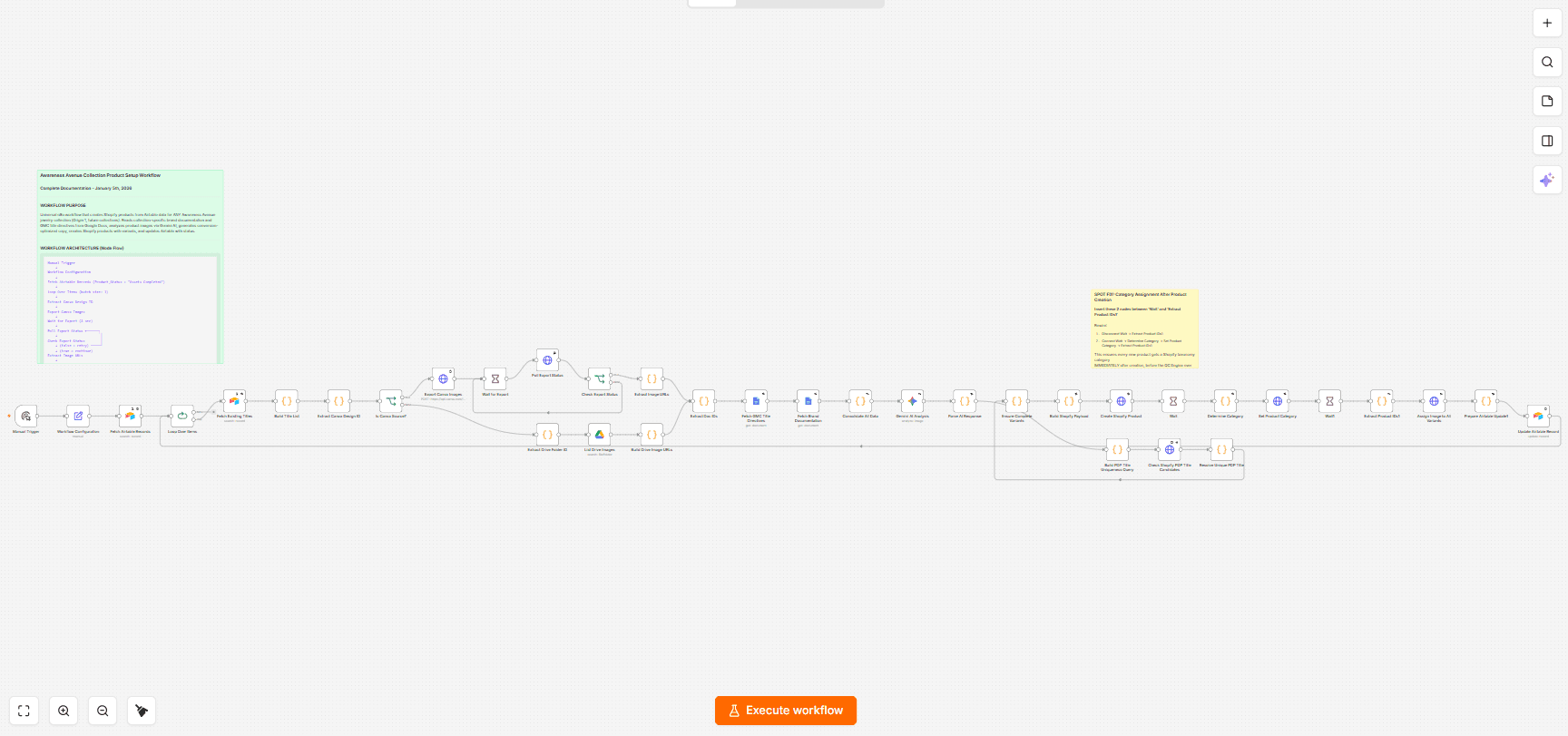
Two n8n workflows that take a jewellery collection from a row in Airtable to a finished, categorised, image-attached Shopify product.
With the brand research and the Google Shopping title rules generated along the way.
What was in the way
A jewellery catalogue is mostly variants. One collection is dozens of products, each with metals, sizes and stones, each needing a title that does not collide with another, a description in the brand's voice, a Google product category, and images attached to every variant.
Done by hand that is a day per collection, and the twentieth product gets less care than the first. The titles drift, the categories get guessed, and Google Merchant Center rejects what it does not understand.
The research underneath has the same problem. Knowing what competitors title a moonstone ring, what buyers actually say about aquamarine, and which keywords Shopping rewards is real work, and nobody does it consistently for every collection.
Four parts, each with a reason
Workflow one, the collection doc generator
Reads the collection row from Airtable, then runs four Perplexity deep research passes in parallel: competitor landscape, material science, customer sentiment, and Google Shopping keywords.
The four results merge, then Gemini writes two documents from them: a brand identity doc and a set of GMC title directives. Both are created in Google Drive, written as Google Docs, and their IDs are written back to the Airtable row.
29 nodes. The output is a reusable brief, not a one-off answer.
Workflow two, the master collection builder
Picks up where the first left off. Reads the ready collections from Airtable and loops one product at a time.
Images come from either source: if the row points at Canva, it triggers a Canva export, polls the export status and waits for the assets; if it points at a Drive folder, it lists the images there instead.
It then pulls the brand doc and the GMC directives back out of Google Docs, consolidates everything, and hands it to Gemini for the product copy.
Titles that cannot collide
Before anything is created, the workflow builds a title query, checks the existing Shopify PDP titles, and resolves a unique one.
This is the node people skip. Two products with the same title is a support problem later and a Merchant Center problem immediately.
Create, categorise, attach
Builds the Shopify payload, creates the product, waits for it to settle, then assigns the image to every variant rather than only the first.
It then ensures the variant set is complete, determines the Google product category and sets it on the product. The Airtable row is updated with the result, so a rerun knows what is already done.
38 nodes, including its own retry and wait handling, because the Canva export and the Shopify create are both slower than the rest of the flow.
The engineering underneath
n8n, self-hosted. Airtable as the source of record. Canva and Google Drive for images, Google Docs for the generated briefs, Perplexity for research, Google Gemini for generation, and the Shopify Admin API for the writes.
The logic that is not an API call sits in 25 Code nodes across the two workflows, because field mapping, deduplication and payload shaping are clearer as readable JavaScript than as a chain of Set nodes.
Built for Awareness Avenue, where I work as co-creator on the automation side. 67 nodes across the two.
Hire me for this
AI & Workflow AutomationFrom $14/hrShopify Store Management & VAFrom $10/hrAPI & IntegrationsFrom $14/hrProjects like this
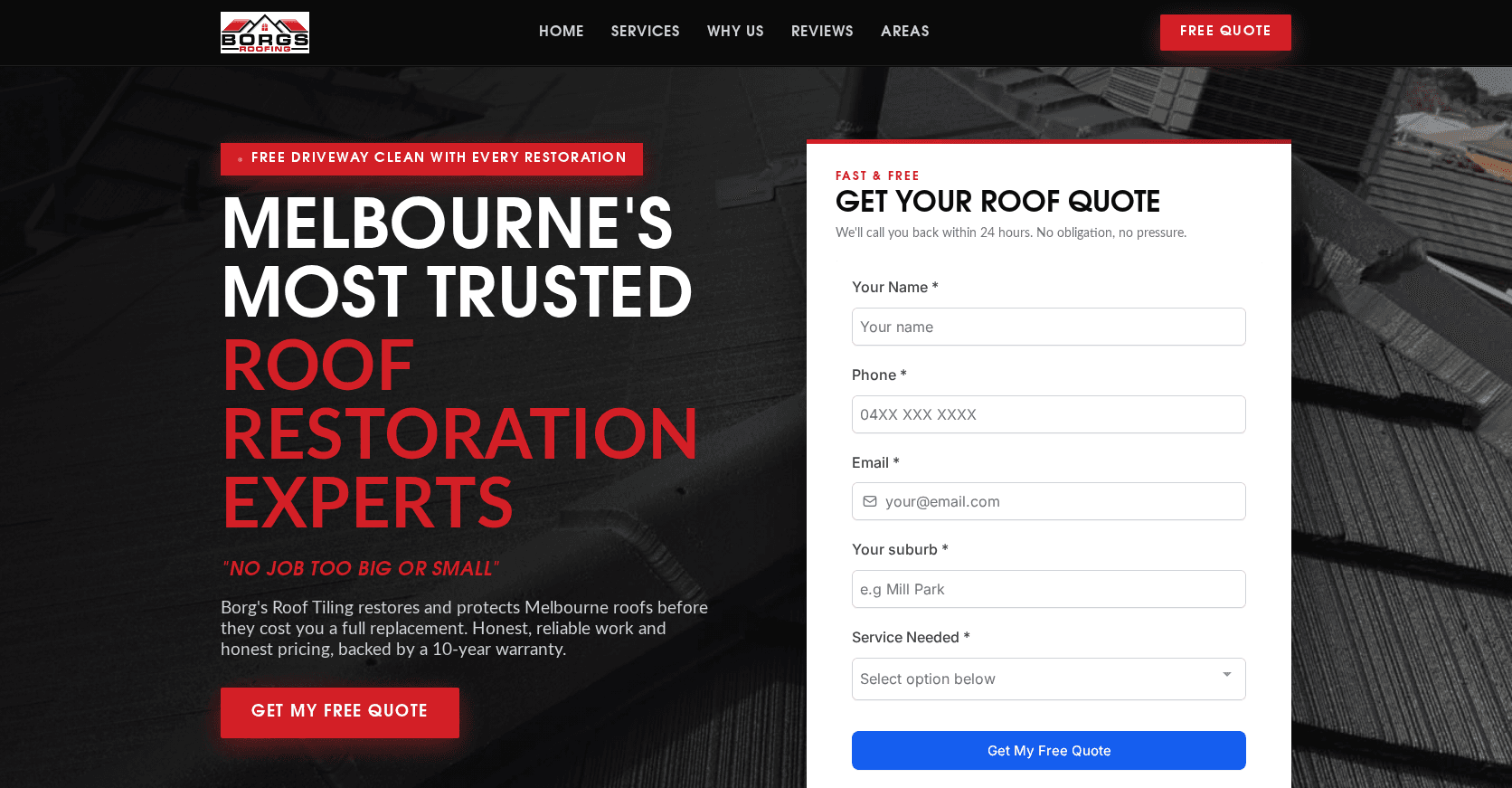
GHL Lead-Capture Pipelines & Automation (Client Work)
GoHighLevel management for client landing pages: building lead-capture pipelines that pull enquiries off...
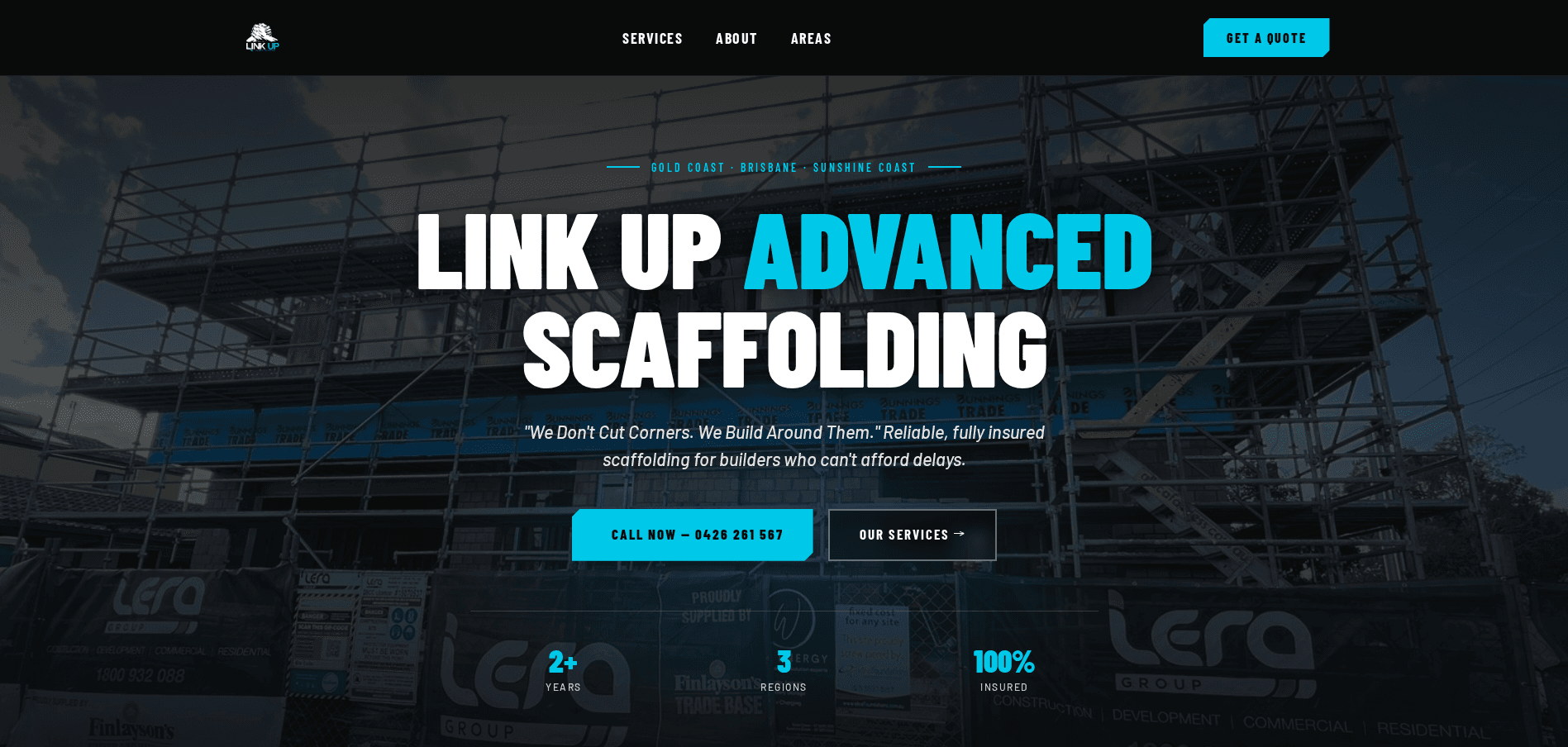
Linkup Advanced Scaffolding, GHL Funnel & Automation (AU)
A GoHighLevel funnel and lead-automation build for Link Up Advanced Scaffolding, serving Gold Coast, Brisbane,...
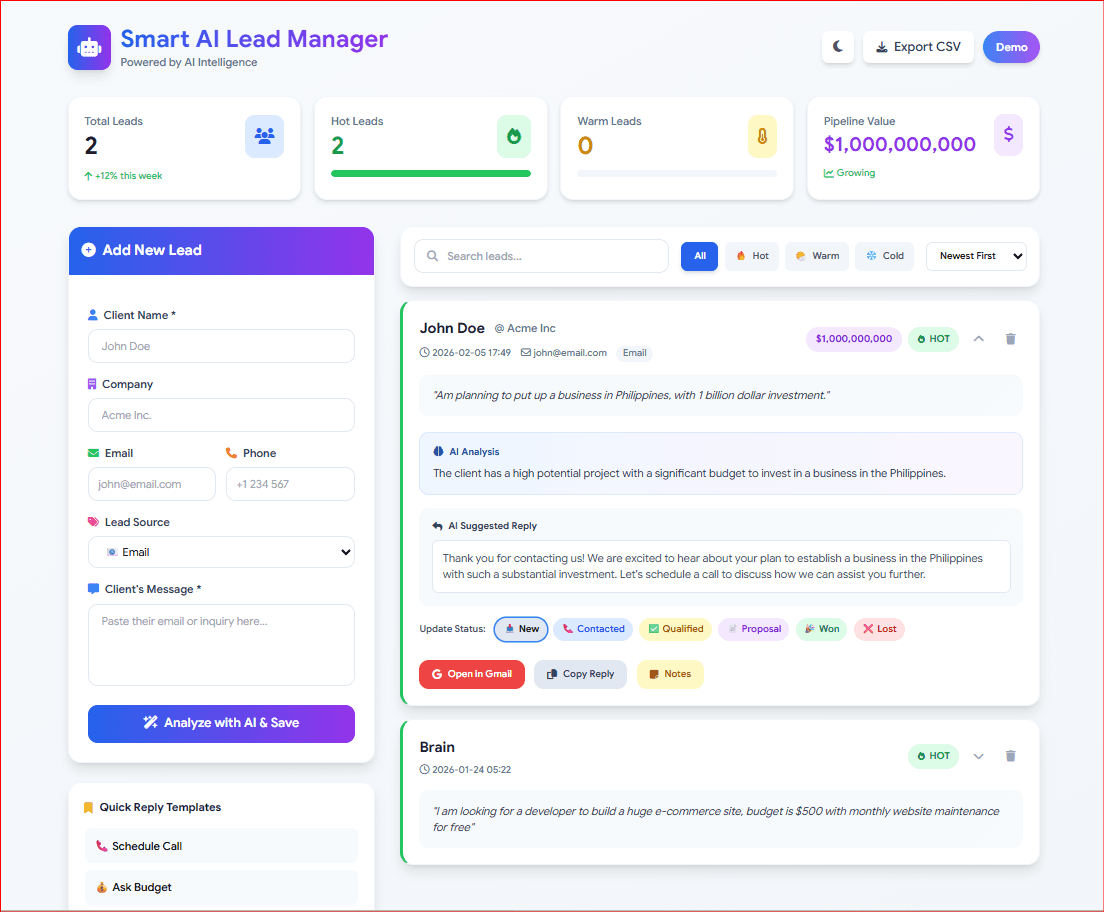
Smart AI Lead Manager
AI-assisted lead management with automatic scoring, drafted reply suggestions and pipeline tracking, built on...
I build software, and I measure whether it works.
The same questions I research are the ones I ask on client builds: is it reliable, is it fast, is it easy to use, and is it secure. Those four drove satisfaction in my ICT portal study, and they shape how I scope and test every project.