
Shopify store (Refresh Theme)
A multi-market Shopify store for a clean beauty brand, serving the Philippines, United States and Australia from a single storefront.
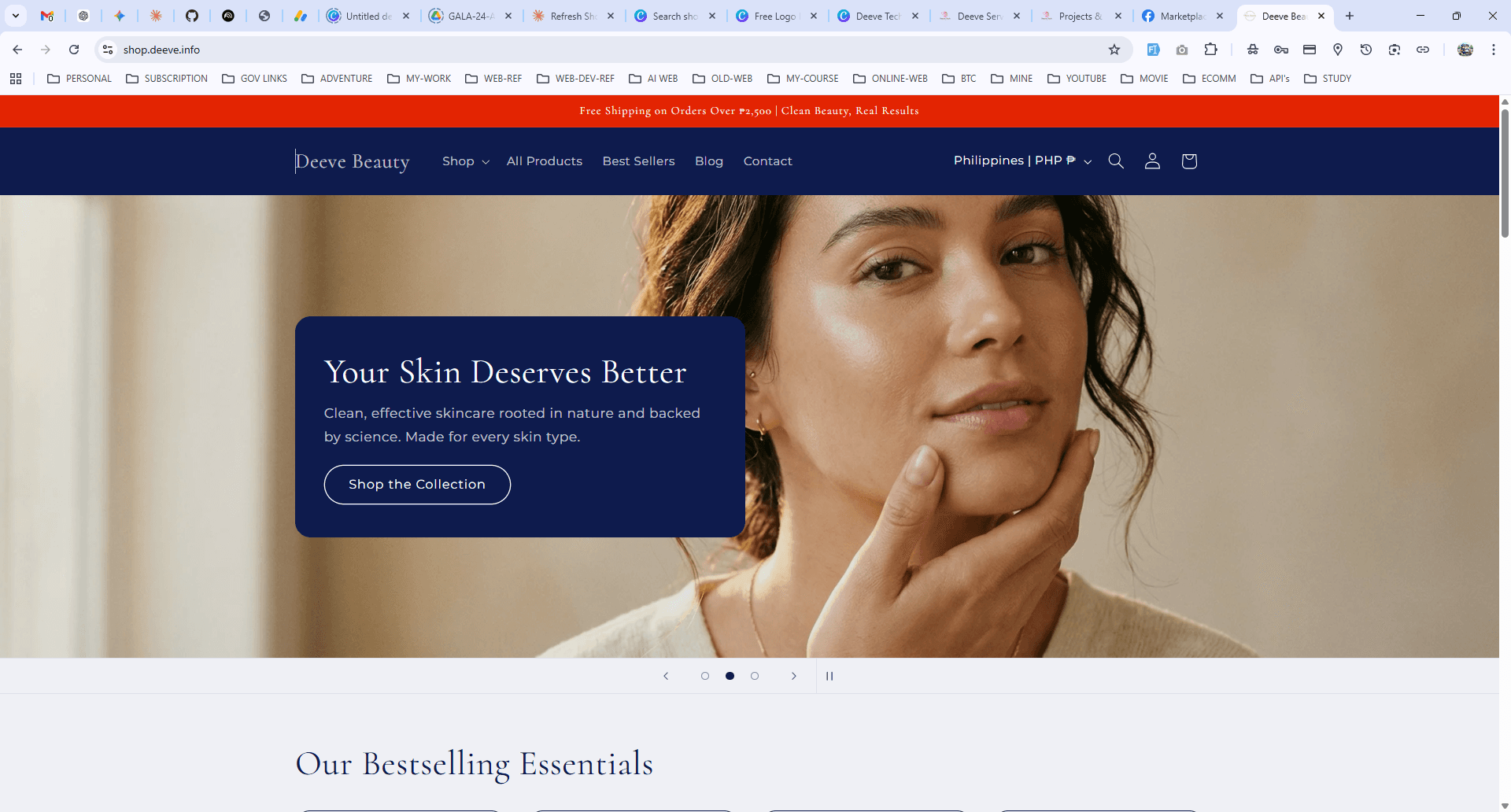
Deeve Beauty is a multi-market Shopify store for a clean beauty and skincare brand, serving the Philippines.
United States and Australia from a single storefront on the Refresh theme.
What was in the way
Selling into three countries from one Shopify store means currency, shipping and content all have to adapt without maintaining three separate builds.
The usual shortcut is hardcoding country-specific text into the theme: a shipping threshold here, a currency symbol there, a returns window in a section heading. It works on the day it is written and quietly becomes unmaintainable the moment anything changes, because the copy lives in template files that only a developer can reach.
The other failure is going the other way and splitting into three stores too early. Three stores means three catalogues to keep in sync, three theme versions to update and three sets of apps to pay for, to serve a catalogue that is identical in all three markets.
Five parts, each with a reason
One store, three markets
Philippines, United States and Australia served from a single storefront using Shopify Markets, with currency and pricing handled at the market level rather than by duplicating the store.
A clean beauty theme treatment
Restrained design appropriate to skincare, where clinical credibility sells better than decoration. Ingredient-led product presentation, generous whitespace, photography given room.
No hardcoded market content
Every market-variable string is configurable through theme settings rather than baked into a template.
This is the decision that determines whether the store is maintainable. A shipping threshold change should be a settings edit by whoever runs the store, not a support request that waits for a developer to be available.
Full ecommerce across all three markets
Collections, product pages, cart and checkout working correctly per market, including the details that break silently: address formats, phone formats and tax display.
Why one store and not five
DECKO runs five separate Shopify storefronts across four countries, and it is the right architecture there. It is the wrong one here.
Five stores is worth the overhead when catalogues genuinely diverge, when languages differ, and when each market has its own merchandising and promotions. DECKO has all three.
A single brand selling the same skincare range into three English-adjacent markets has none of them. Splitting would triple the maintenance to solve a problem that Shopify Markets already solves.
Getting this choice wrong in either direction is expensive. Splitting too early creates permanent overhead. Splitting too late means an emergency migration when one market finally needs its own catalogue.
The engineering underneath
Shopify on the Refresh theme with Liquid customisation rather than a bespoke theme.
Refresh is a sound base for a small catalogue, it is maintained by Shopify, and it receives updates. For a brand at this stage, inheriting Shopify's ongoing theme maintenance is worth more than the marginal design control of a theme built from scratch.
Customisation is kept to sections and settings so theme updates remain applicable rather than being overwritten.
Shopify with the Refresh theme, Liquid customisation and Shopify Markets for multi-country currency, pricing and shipping.
Hire me for this
Shopify Store Management & VAFrom $10/hrAmazon & Ecommerce VAFrom $10/hrProjects like this
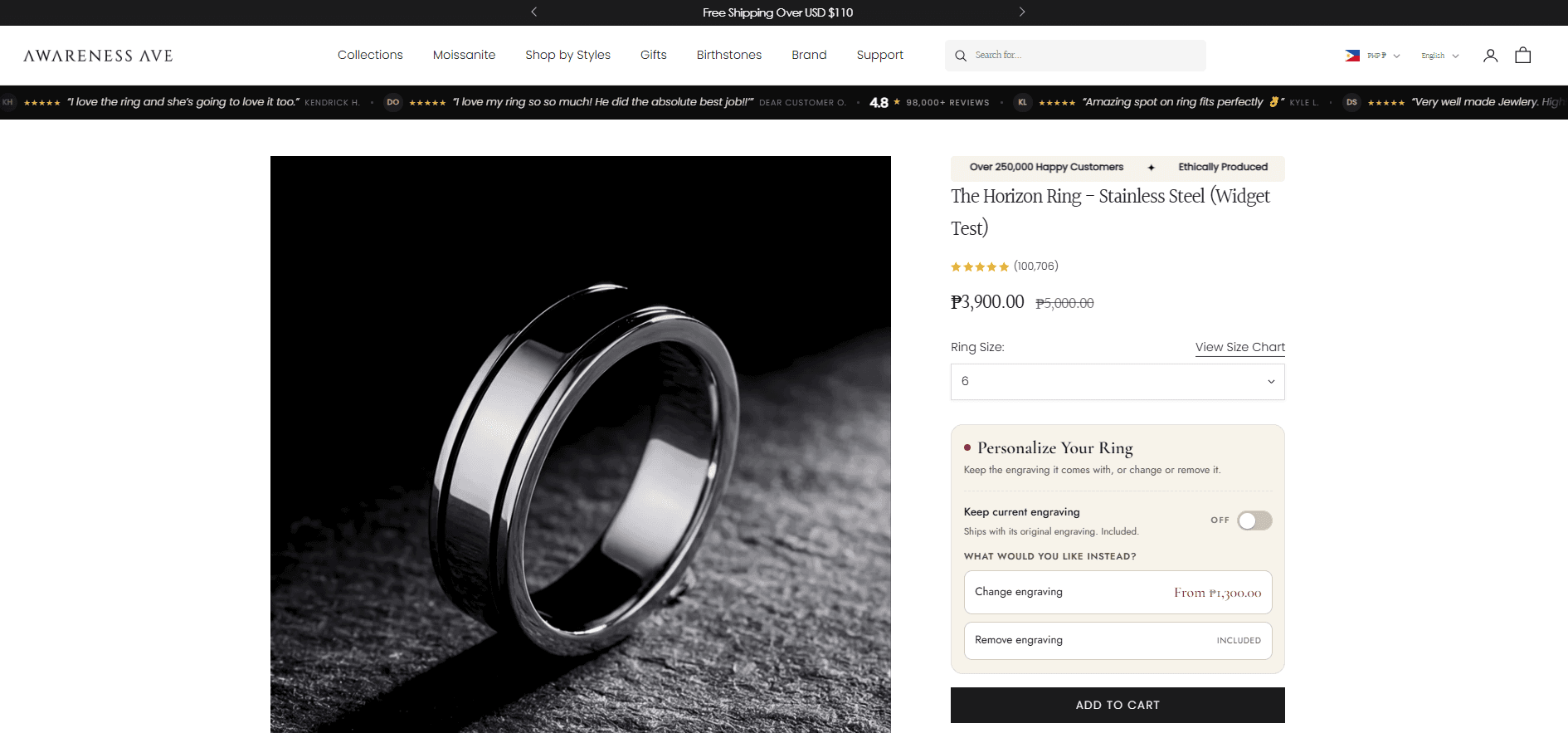
Awareness Avenue, Customizer
Six Shopify Liquid product customizers for personalised jewellery, including the ring pair that replaced a...
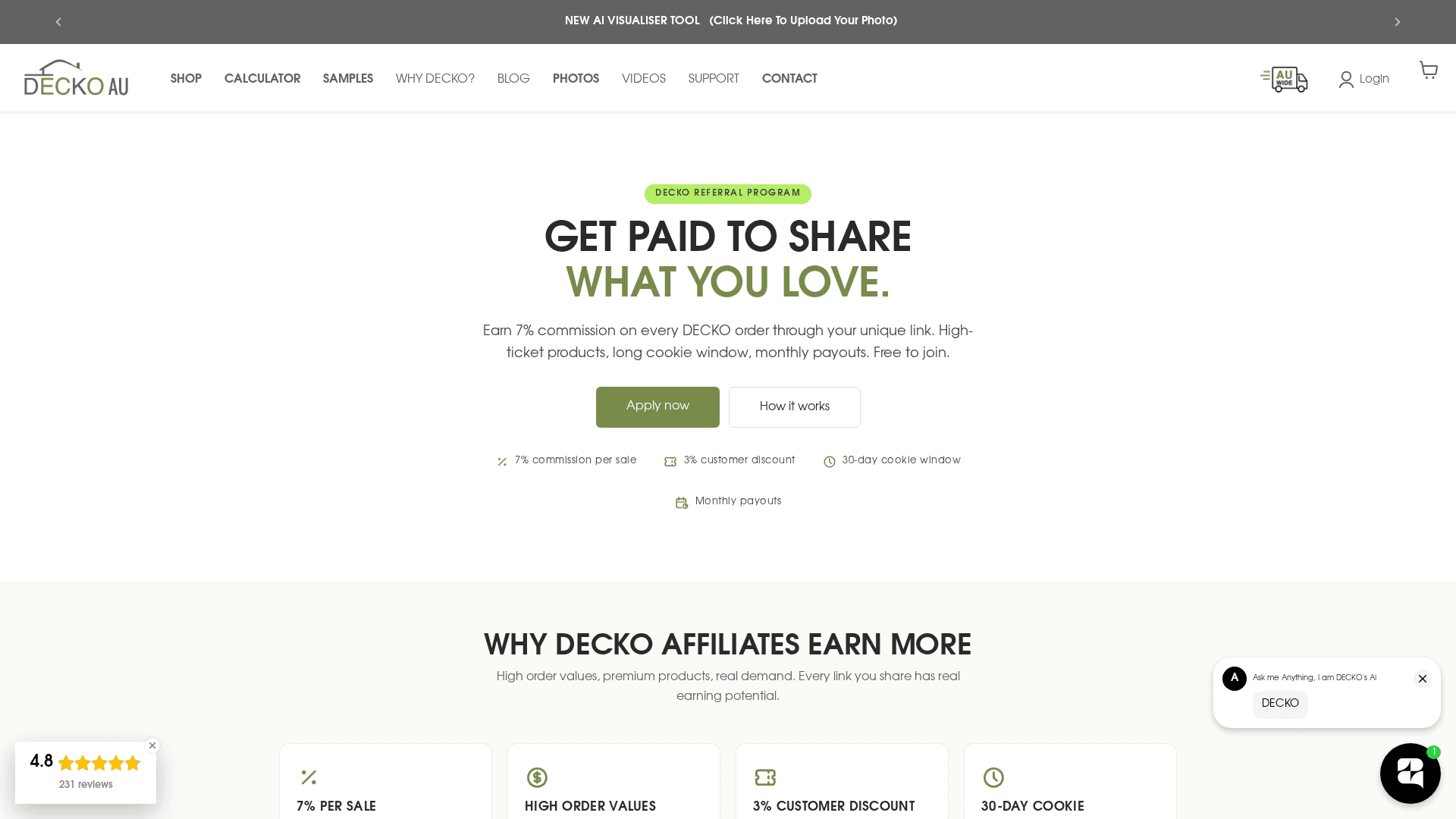
DECKO Referrals and Affiliate Page
An affiliate recruitment landing page for DECKO Australia, powered by UpPromote. Affiliates earn 7% commission...
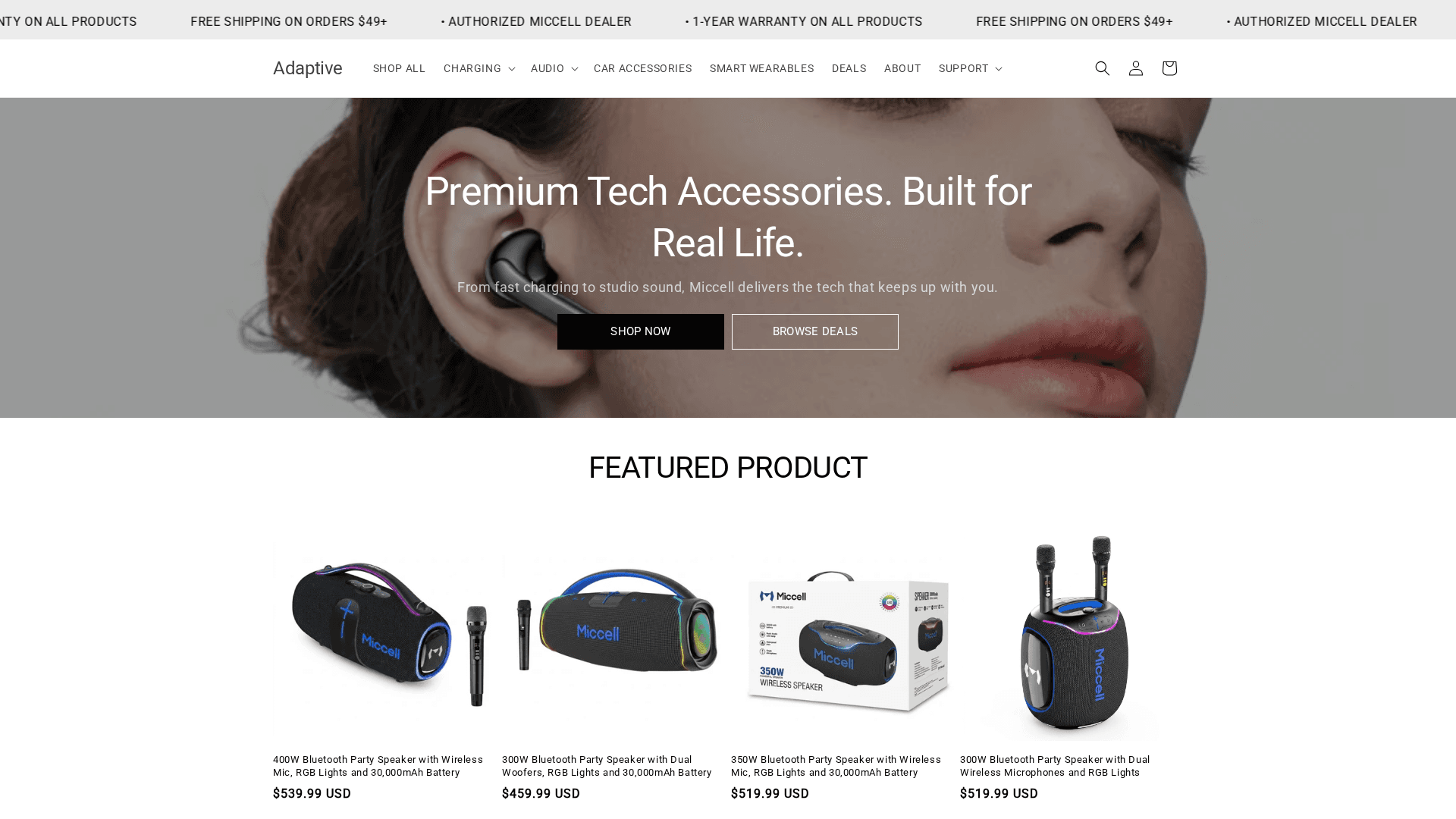
Adaptive Automate, Shopify Store Build
A full Shopify store build for Adaptive Automate, an independent retailer of Miccell tech accessories:...
I build software, and I measure whether it works.
The same questions I research are the ones I ask on client builds: is it reliable, is it fast, is it easy to use, and is it secure. Those four drove satisfaction in my ICT portal study, and they shape how I scope and test every project.