
AgriBooks, Farm Financial Management System
A farm financial and crop management system that tracks revenue, expenses, and profit per land and crop cycle. Built for sugarcane and pineapple operations, with partner profit-sharing, expense breakdowns, and 12-month financial charts.
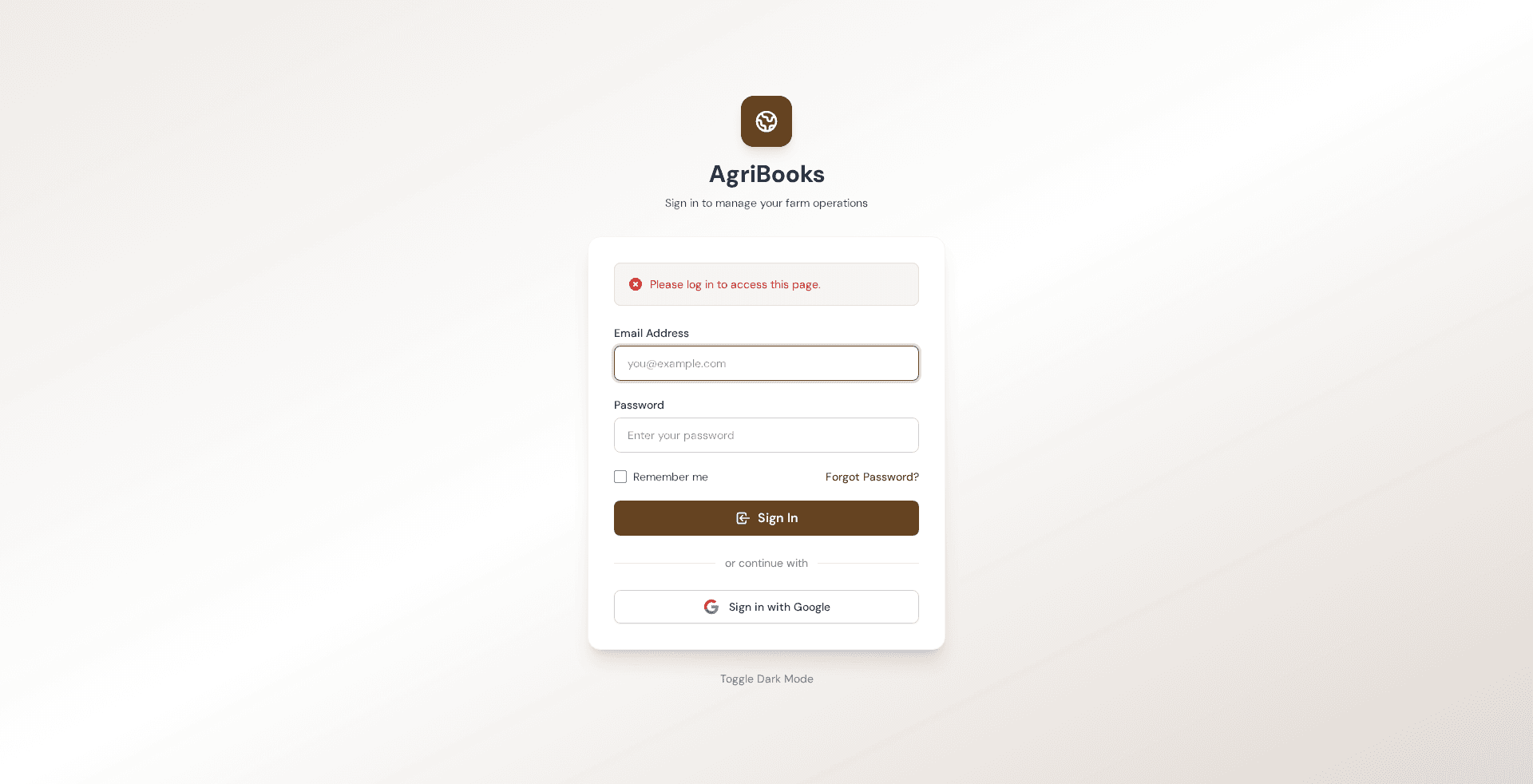
AgriBooks gives farm operators a real profit and loss figure per piece of land and per crop cycle.
Replacing spreadsheet bookkeeping for farms running several lands, several cycles and partner profit shares.
What was in the way
Farm bookkeeping in a spreadsheet collapses at a specific point.
It works while there is one piece of land and one crop. It stops working the moment there are several lands, several crop cycles running at different stages, and partners taking a share of specific cycles rather than of the whole farm.
The question a farmer actually needs answered is narrow: did this land, on this crop, in this cycle, make money. A single ledger cannot answer it, because the expenses are mixed together. Fertiliser bought on one day covers two lands. Labour on a Tuesday covers whichever cycle needed people. By harvest nobody can separate them.
The consequence is that the farm knows its overall position and nothing else. It cannot tell which crop is worth repeating, which land is underperforming, or whether a partner arrangement is fair, because the numbers to answer any of that were never kept apart.
Five parts, each with a reason
Per-cycle profitability
Each active cycle, identified by crop, hectares and start date, carries its own revenue, expenses and profit.
The cycle is the unit of accounting rather than the month or the farm. That is the whole design decision, and everything else follows from it. Once expenses attach to a cycle, every other question becomes answerable.
Partner balances split per cycle
Which is what makes profit-sharing workable rather than a source of arguments.
A partner with a share in two of five cycles has a balance derived from those two. Calculated from the ledger rather than agreed from memory at the end of a season, which is where these arrangements normally break down.
Revenue against expenses over time
Charted with Chart.js for trend visibility across cycles, so a pattern across seasons is visible rather than inferred.
Rollup dashboard
Total revenue, expenses, net profit, margin, land count and outstanding balances in one view.
The per-cycle detail is what makes decisions. The rollup is what tells the operator whether the farm is solvent this month. Both are needed and they answer different questions.
Expense breakdown by category
Land preparation, cultivation, fertiliser, labour, pesticide and seeds.
Categorised so a cost overrun is attributable rather than general. Knowing expenses rose is not useful. Knowing fertiliser rose 40 percent on one crop is.
The engineering underneath
PHP with MySQL, a Tailwind interface and Chart.js.
The data model is the substance here. Cycles belong to lands, expenses and revenue belong to cycles, partner shares attach to cycles. Get that right and the reporting is straightforward queries. Get it wrong, by attaching expenses to the farm and trying to apportion afterwards, and no amount of reporting code recovers the information.
Interface built for a farm office rather than an accountant. Categories are the ones farmers already use, entry is quick, and nothing requires bookkeeping knowledge to operate.
Conventional PHP rather than a framework. It runs on ordinary hosting, it has no deployment pipeline to maintain, and a farm business should not need a developer on call to keep its books working.
PHP with MySQL, Tailwind CSS and Chart.js. Hosted on its own subdomain.
See it live
AgriBooks, Farm Financial Management SystemThe live site · agribook.deeve.infoHire me for this
Full-Stack Web DevelopmentFrom $14/hrPHP & Laravel Source CodeFrom $14/hrWebsite Maintenance & SupportFrom $10/hrProjects like this
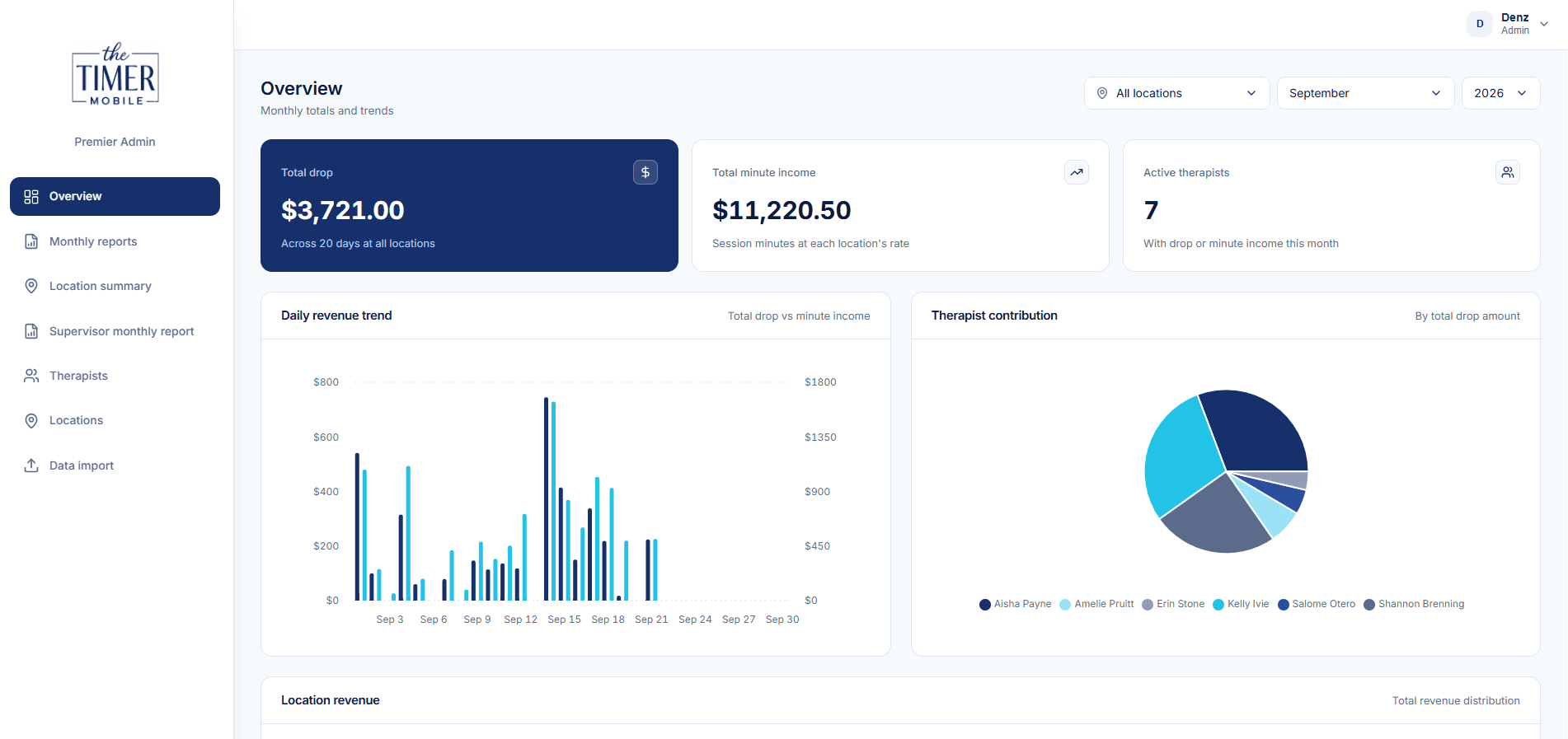
Premier Metrics, Admin Dashboard
The office dashboard behind a mobile timer app. React and TypeScript on Vite with Supabase and Vercel: monthly...
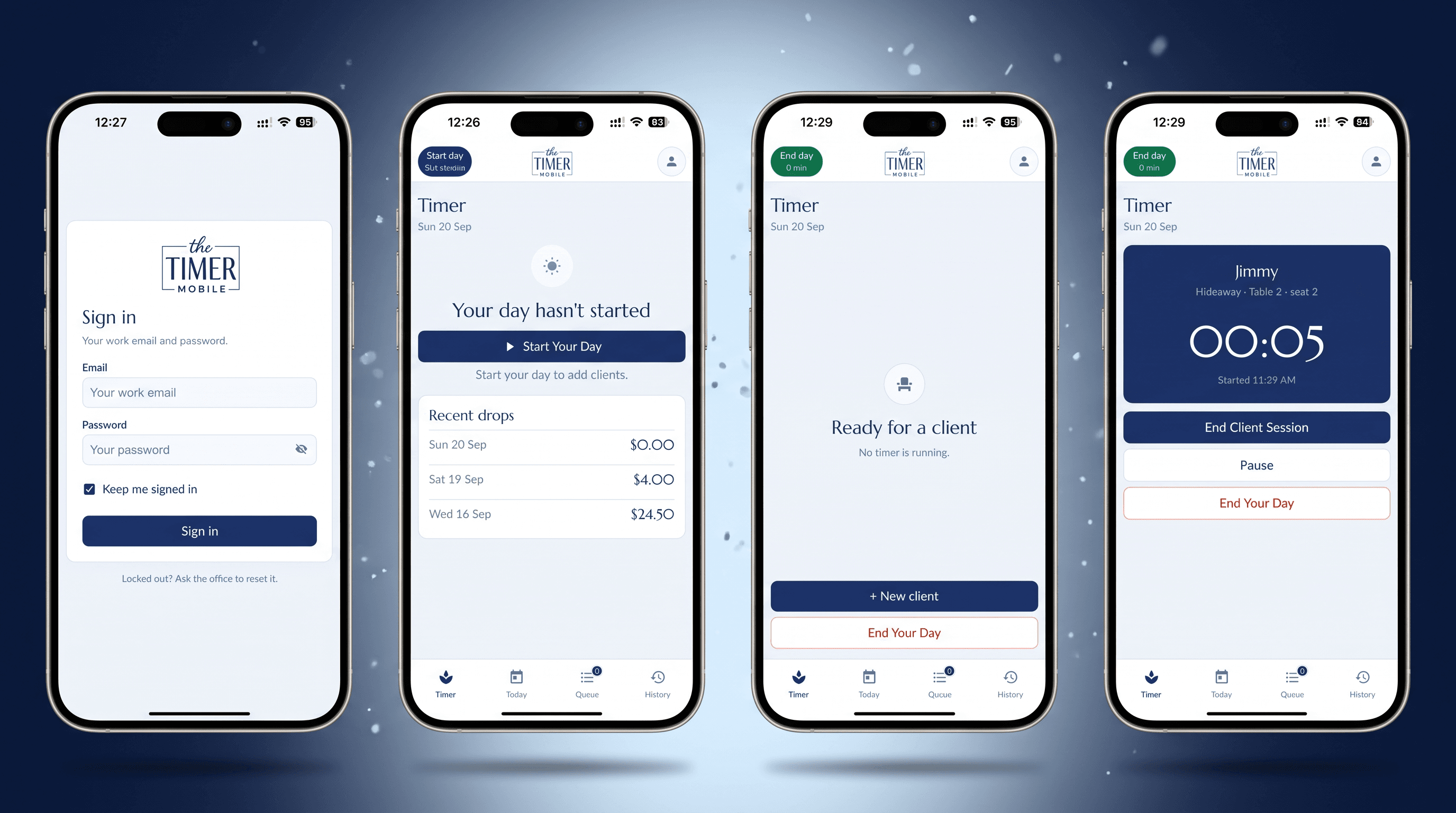
Premier Timer, iOS and Android App
Taking over from a departing programmer: an unfinished React Native app rebuilt and shipped to the App Store...

Deeve Technologies Portfolio, Next.js Rebuild
This site: my portfolio rebuilt from a custom WordPress theme onto Next.js 16, React 19 and Supabase, with...
I build software, and I measure whether it works.
The same questions I research are the ones I ask on client builds: is it reliable, is it fast, is it easy to use, and is it secure. Those four drove satisfaction in my ICT portal study, and they shape how I scope and test every project.